An interesting story is reproduced in the Register regarding the tale of a Tasmanian fellow who started a blog about Saab as a regular guy fan site type thing. Saab like it so much they have given him an exec job. Readallaboutit here....
I'm reminded of the time when NTL bought out NThellworld, a "fan" site of NTLworld. Different story there though.
Monday, 21 March 2011

Thursday, 17 March 2011
Browser Wars: Microsoft's IE9 Salvo
Well the production IE9 is out and anyone who really cared has been on the Beta or RC for weeks or months anyway. If you want a serious technical debate about the whys and wherefores of browser choice then I think you know better than to come here for that. What you get here is opinion! And its pure, raw, undisguised opinion. I like to think of it as “informed comment”. What you think of it is up to you.
The thing I find interesting about the browser wars is how low key its all become. There was a point at which fanbois of whichever browser was soup-du-jour would be screaming from the rooftops about this feature or that and the relative security of each, about open source components or proprietary standards.
Seems to have gone pretty quiet. Even the annual browser hacking contests don't provide the flurry of excitement they perhaps aught to. Every now and again you get a new release of one of the “big three” browsers and these seem to be met with a decreasing level of interest. This is very odd as more and more applications are delivered through the web now (home user and business) and more and more sites are all about RIA, Web 2.0, and security is a big issue online as we do more business, banking, shopping, etc. in cyberspace. So really the browser is more important now than its ever been – down to the fact Google's own OS is basically just a browser...
So IE9 is out and IE9 is actually good. It appears quicker and more reliable than IE8. It has a lot of the things about Chrome which I like. There’s a lot of stuff “under the hood” which is goodness. I'll leave it at that, it gives the impression I know what that’s all about...
The best thing about IE9 is that it doesn't work on Windows XP. Much like IE6 Microsoft needs to kill WinXP dead, kill it to death and burn it with fire. XP is pretty much a reworked W2K. This is technology more than a decade old. For some reason there are a lot of IT pros who just can't move on. I thought IT peeps were supposed to be forward looking and tech-savvy yet when it comes to OS upgrades I've never met such a bunch of luddites.
I hear out there in blogland that IE9 is PHAIL because it doesn't run on XP. Sorry, dude, you are PHAIL because you are still running XP.
Perhaps one of the reasons browser wars are cooled down now is that most people have twigged you don't need to have just one browser. On my office PC I have Windows7 and it runs IE9 and Firefox. I use different browser for different reasons. We have a lot of SharePoint and Exchange so IE is my default browser. It just works better that way. I installed Firefox as some sites weren't IE9 ready and I liked IE9 to be using it as my default browser from the Beta. At home I use Chrome as my PC is a little slow and Chrome is quick. I also have IE8 and Firefox on there. I need to upgrade to Win7, IE9, etc. on that box. IE9 might even replace Chrome as Chrome don't play nice with other browsers and IE9 seems as quick as Chrome.... For balance I have Ubuntu on a laptop and Firefox on that. So yeah, you can run whatever combo of browsers you like which is why some of the market share data on browsers can be a bit iffy. After all, Firefox has 100% of the market where I am. This despite the fact I use Chrome and IE more.
Go figure.
Anyway, if you are committed to IE as a browser then IE9 is just another reason to ditch XP and upgrade to a modern damn OS.
The thing I find interesting about the browser wars is how low key its all become. There was a point at which fanbois of whichever browser was soup-du-jour would be screaming from the rooftops about this feature or that and the relative security of each, about open source components or proprietary standards.
Seems to have gone pretty quiet. Even the annual browser hacking contests don't provide the flurry of excitement they perhaps aught to. Every now and again you get a new release of one of the “big three” browsers and these seem to be met with a decreasing level of interest. This is very odd as more and more applications are delivered through the web now (home user and business) and more and more sites are all about RIA, Web 2.0, and security is a big issue online as we do more business, banking, shopping, etc. in cyberspace. So really the browser is more important now than its ever been – down to the fact Google's own OS is basically just a browser...
So IE9 is out and IE9 is actually good. It appears quicker and more reliable than IE8. It has a lot of the things about Chrome which I like. There’s a lot of stuff “under the hood” which is goodness. I'll leave it at that, it gives the impression I know what that’s all about...
The best thing about IE9 is that it doesn't work on Windows XP. Much like IE6 Microsoft needs to kill WinXP dead, kill it to death and burn it with fire. XP is pretty much a reworked W2K. This is technology more than a decade old. For some reason there are a lot of IT pros who just can't move on. I thought IT peeps were supposed to be forward looking and tech-savvy yet when it comes to OS upgrades I've never met such a bunch of luddites.
I hear out there in blogland that IE9 is PHAIL because it doesn't run on XP. Sorry, dude, you are PHAIL because you are still running XP.
Perhaps one of the reasons browser wars are cooled down now is that most people have twigged you don't need to have just one browser. On my office PC I have Windows7 and it runs IE9 and Firefox. I use different browser for different reasons. We have a lot of SharePoint and Exchange so IE is my default browser. It just works better that way. I installed Firefox as some sites weren't IE9 ready and I liked IE9 to be using it as my default browser from the Beta. At home I use Chrome as my PC is a little slow and Chrome is quick. I also have IE8 and Firefox on there. I need to upgrade to Win7, IE9, etc. on that box. IE9 might even replace Chrome as Chrome don't play nice with other browsers and IE9 seems as quick as Chrome.... For balance I have Ubuntu on a laptop and Firefox on that. So yeah, you can run whatever combo of browsers you like which is why some of the market share data on browsers can be a bit iffy. After all, Firefox has 100% of the market where I am. This despite the fact I use Chrome and IE more.
Go figure.
Anyway, if you are committed to IE as a browser then IE9 is just another reason to ditch XP and upgrade to a modern damn OS.
Friday, 11 March 2011
"Taking the fun out of motoring"
There has been a general opinion in the world of forums, blogs and general banter of late regarding the removal of the “fun” element of motoring. This is something which has been gently becoming the default attitude on motoring by most people you speak to now.
The argument is that this is all the fault of “the man”. The problem, according to many I speak to, is that “the man” is determined to remove every last bit of fun from our lives and quite high on his list is the fear that we Brits may actually enjoy driving our cars.

There are two sub-groups in the proponents of this argument. Firstly the folks too young to remember this supposed golden era of motoring which occurred at some fairly unspecified point in the past but must have been before they passed their driving tests, and the second group are those elderly curmudgeons like myself who have been there, seen that and of course it was all much, much better “in my day”.

I'm going to ignore the youngsters in this, they are just buying into the same nostalgia packaging that my parents' generation used to convince me as a kid that the 60s were the swingingest time and that I had missed out by growing up in the 80s.
The grumpy old man perspective is part fashion (hense all the TV programmes, books, newspaper columns and the like devoted to “grumpies”) and part a feature of, well, just growing up. Or at least growing old. See when you are young, you are full of energy, drive, enthusiasm and this great desire to see all the wonders that the world has to offer. Then you get to 30 or so and you realise that you've pretty much seen the great diversity and that although you haven't really seen it ALL, what of it that there is left unseen is just more of the same with a slight iterative variation. Cars, bikes, booze, women, music, comedians, movies, and so on and so on. Yes, you appreciate them, yes you may be enthusiastic still, but the edge is gone. Some try to maintain the buzz they had in their 20s or whenever by just ratcheting up the level and going to a wild excess. But that really isn't sustainable.

So we end up looking back at our 20s as a golden era and telling ourselves and everybody else who'll give us the time of day that those were the days my friend, we thought they'd never end. And seriously, Mary Hopkins was cool once. Or so I am told. So when some old git like me is telling you that the fun has been taken out of motoring what they mean really is that they are old, and getting grumpy. One of the big things you have to ask is what the fun is which has been taken out of it. And for many people its the having a laugh with your mates, tear-arseing about, chasing girls and getting in a few scrapes, laughing it off and then going clubbing. Or whatever. Honestly, my life was just like a Fast & The Furious movie, but with Capris, Mantas, Cortinas and so forth. That bird just don't fly when you are 40.
 There is another way of looking at this and its one which I have been noticing myself over the passing years. Motoring in the UK is becoming more tiresome, yes, and not just because of the additional mileage on my bones. But its not the price of petrol, the price of insurance, the encroaching regulation of IVA/BIVA and laws to make you insure your car whenever it is taxed. Its not even the speed camera. Its traffic. To be honest most of my driving I am lucky to get anywhere near the speed limit let alone to be worrying about speed cameras. There are quite simply way more cars on the road now than there were 10, 20 or 30 years ago. If you then equate “the fun of motoring” to be linked directly and proportionally to your ability to drive really quickly on public roads without getting held up by other traffic then, yup, you are screwed.

There are plenty of folks pouring scorn on younger car enthusiasts who modify their cars – not to go faster or handle better – but to be more “pimped out”. Styling, accessories, audio and entertainment equipment seems to be the order of the day. But if you can only insure a 1.2 litre Vauxhall Corsa then what IS performance? If you live in the urban sprawl and can never get to more than 40 MPH, what does performance matter? One hot rodders' adage I like is “its not how fast you go, its how you go fast” and for British metropolitan motorists its not even about “fast”.

You have two choices really. Redefine what fun is by enjoying owning a car which is cool, and is still cool even if its stuck doing 20 MPH in a school zone, or crawling up to roadworks on your congested commute, or you do something about the congestion. Seems to me that half the cars on the roads are driven by people who have no interest in actually driving, they just do it because its the default way to get from where they are to where they need to be. Restructuring how non-enthusiasts get about would certainly free up some road space for the rest of us.

I don't see that happening. Any attempt to improve public transport is viewed as being an opportunity for the government to chuck a pile of money down a well and any attempt to discourage folks from “unnecessary” use of their cars is reviled as a new form of Stalinism.
So that takes us back to the point about redefining fun. I've moved on from thinking love is being drunk and trying to persuade some equally drunk lass to come back to my place, or at the very least up an alley and behind some bins. Equally I have to say I don't have to drive at ten tenths every minute I'm behind the wheel, I get a kick from when people point or wave or photograph my car, from the fact that just driving it is cool. For ten tenths there is still the rac
The argument is that this is all the fault of “the man”. The problem, according to many I speak to, is that “the man” is determined to remove every last bit of fun from our lives and quite high on his list is the fear that we Brits may actually enjoy driving our cars.

There are two sub-groups in the proponents of this argument. Firstly the folks too young to remember this supposed golden era of motoring which occurred at some fairly unspecified point in the past but must have been before they passed their driving tests, and the second group are those elderly curmudgeons like myself who have been there, seen that and of course it was all much, much better “in my day”.

I'm going to ignore the youngsters in this, they are just buying into the same nostalgia packaging that my parents' generation used to convince me as a kid that the 60s were the swingingest time and that I had missed out by growing up in the 80s.
The grumpy old man perspective is part fashion (hense all the TV programmes, books, newspaper columns and the like devoted to “grumpies”) and part a feature of, well, just growing up. Or at least growing old. See when you are young, you are full of energy, drive, enthusiasm and this great desire to see all the wonders that the world has to offer. Then you get to 30 or so and you realise that you've pretty much seen the great diversity and that although you haven't really seen it ALL, what of it that there is left unseen is just more of the same with a slight iterative variation. Cars, bikes, booze, women, music, comedians, movies, and so on and so on. Yes, you appreciate them, yes you may be enthusiastic still, but the edge is gone. Some try to maintain the buzz they had in their 20s or whenever by just ratcheting up the level and going to a wild excess. But that really isn't sustainable.

So we end up looking back at our 20s as a golden era and telling ourselves and everybody else who'll give us the time of day that those were the days my friend, we thought they'd never end. And seriously, Mary Hopkins was cool once. Or so I am told. So when some old git like me is telling you that the fun has been taken out of motoring what they mean really is that they are old, and getting grumpy. One of the big things you have to ask is what the fun is which has been taken out of it. And for many people its the having a laugh with your mates, tear-arseing about, chasing girls and getting in a few scrapes, laughing it off and then going clubbing. Or whatever. Honestly, my life was just like a Fast & The Furious movie, but with Capris, Mantas, Cortinas and so forth. That bird just don't fly when you are 40.


There are plenty of folks pouring scorn on younger car enthusiasts who modify their cars – not to go faster or handle better – but to be more “pimped out”. Styling, accessories, audio and entertainment equipment seems to be the order of the day. But if you can only insure a 1.2 litre Vauxhall Corsa then what IS performance? If you live in the urban sprawl and can never get to more than 40 MPH, what does performance matter? One hot rodders' adage I like is “its not how fast you go, its how you go fast” and for British metropolitan motorists its not even about “fast”.

You have two choices really. Redefine what fun is by enjoying owning a car which is cool, and is still cool even if its stuck doing 20 MPH in a school zone, or crawling up to roadworks on your congested commute, or you do something about the congestion. Seems to me that half the cars on the roads are driven by people who have no interest in actually driving, they just do it because its the default way to get from where they are to where they need to be. Restructuring how non-enthusiasts get about would certainly free up some road space for the rest of us.
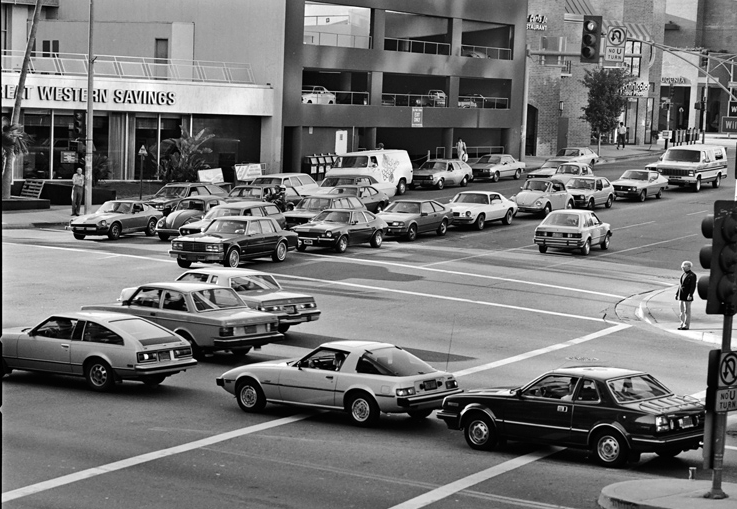
I don't see that happening. Any attempt to improve public transport is viewed as being an opportunity for the government to chuck a pile of money down a well and any attempt to discourage folks from “unnecessary” use of their cars is reviled as a new form of Stalinism.
So that takes us back to the point about redefining fun. I've moved on from thinking love is being drunk and trying to persuade some equally drunk lass to come back to my place, or at the very least up an alley and behind some bins. Equally I have to say I don't have to drive at ten tenths every minute I'm behind the wheel, I get a kick from when people point or wave or photograph my car, from the fact that just driving it is cool. For ten tenths there is still the rac
Metropolitan Fire Truck
Spotted in the ads on Hemmings is this neat Nash (nee Austin) Metropolitan fire truck. I really get a kick out of these kinds of conversions on vehicles so exceptionally unsuited for the task that you have to wonder if they were a purposeful novelty when built new.

The ad for it has no story. I assume from the "Junior fire dept" logos that it was used to promote fire safety in schools or something. If anyone knows, let me know...

The ad for it has no story. I assume from the "Junior fire dept" logos that it was used to promote fire safety in schools or something. If anyone knows, let me know...
Wednesday, 9 March 2011
Ford's Fully-connected Focus
As regular readers of the blog will know I am a bit of a fan of connectivity in cars. I want Audiogalaxy in my dash. I want my tweets read out to me. I want internet radio on the move. I want seamless integration with the technology I use when my backside is resting behind the wheel and when my backside is resting behind the keyboard. I am a geek on wheels I guess.
Ford have bundled voice control (which is the bit they seem to be hawking the hardest) as
well as a host of media ports - a couple of USB ports, Bluetooth, an SD card slot and RCA jacks for AV hookups – to ensure your media requirements are met. The Sync system also provides you with a Wi-Fi hotspot in the car which either comes from tethering your mobile or alternatively through an optional extra dongle.
No word on pricing as yet, and the first car to get Sync is the Focus.
 |
| Not a pretty dash, but fully connected. |
Ford have announced their Sync product for the UK market now. This is an integration tool
for the connected automobile. Basically an electronic control hub in the car links with your iPhone, Blackberry or Android phone to integrate these with the Ford inbuilt entertainment and navigation functions. Link it with an OBD reader as well and I'll be smiling. Smiling is not what everyone will be doing though. The feature which automatically calls the police if you have an accident may seem a little “spy in the cab” for most!
for the connected automobile. Basically an electronic control hub in the car links with your iPhone, Blackberry or Android phone to integrate these with the Ford inbuilt entertainment and navigation functions. Link it with an OBD reader as well and I'll be smiling. Smiling is not what everyone will be doing though. The feature which automatically calls the police if you have an accident may seem a little “spy in the cab” for most!
 |
| RCA ports for AV, USB and data cards |
well as a host of media ports - a couple of USB ports, Bluetooth, an SD card slot and RCA jacks for AV hookups – to ensure your media requirements are met. The Sync system also provides you with a Wi-Fi hotspot in the car which either comes from tethering your mobile or alternatively through an optional extra dongle.
 |
| The UI - its Microsoft based BTW. |
No word on pricing as yet, and the first car to get Sync is the Focus.
Tuesday, 8 March 2011
Reyland 6 litre Firenza project
I don't know how many people following this blog are also members of the Overclockers forum but there is a spectacular HC series Vauxhall Firenza (flat front) which has been outfitted with the serious Chevy 6 litre LS motor.

My words cannot do this one justice. Go see for yourself HERE

The only words I can think of are "muthahuggin awesome" - forget ramraiding Halfords in a Corsa, this is how to modify a Vauxhall...

My words cannot do this one justice. Go see for yourself HERE

The only words I can think of are "muthahuggin awesome" - forget ramraiding Halfords in a Corsa, this is how to modify a Vauxhall...
Wednesday, 2 March 2011
Bad science. Is there any other kind now?
I'm a little behind on my bile so these two stories are not quite the cutting edge of the news that they were last week, but they are current enough to use as further examples of bad science and woolly thinking in the media. Or rather woolly thinking on what constitutes a meaningful study.
The first item is the Which? report on organic food. This was widely reported middle of last week. Which? concluded that there is no value in organic foods based on its testing of three foodstuffs which include potatoes and tomatoes, these being the two of the three which “prove” their case. The “proof” being that non-organic potatoes have more vitamin C than organic potatoes and that non-organic tomatoes taste better than organic ones. Which when stated this way does seem damning. Until you consider a few things. Most consumers who buy organic do so because of the reduction in pesticides and intensive farming methods which the organic movement believe are harmful to the environment in general. That is a completely different argument which I don't propose to get into here but it is one which Which? is not addressing. At the risk of a pun its not comparing apples with apples.
The principle behind the organic movement is that people buy organic because they think they are saving the planet. Vitamin C content has nothing to do with it.
The next thing you have to ask is how were the varieties selected? Were they the same strains and were they grown in a comparative manner? Some types of potato may naturally contain more vitamin C than others anyway and the difference is in a completely different reason than organic vs. not. I'm not sure vitamin C levels in potatoes is really part of the deal anyway. I've read a fair number of people say we get too much vitamin C anyway, the excess just passes right through you. If you are concerned about your vitamin C levels then rather than mess about which potatoes you eat you could always try an orange or something...
As for the “tastes better” argument – this is matter of opinion and will have all manner of variation based on age, personal preference, ethnic background and whatever. Personally I like Cadbury chocolate better than Green & Blacks. So is dairy milk “the best” or even “better” chocolate? Probably not. But I'm sure I could get a taste test panel together which proves it. This was just another meaningless report in a sea of “diversion” news articles to take your mind off the conflict in Libya or the death toll in Christchurch.
The one which really got my goat was an article on Radio 4 in which the correspondent rolled out an allegation that IT had failed to reduce paper in the modern business. There was much scoffing over “the paperless office” and so forth. Now you can pick on the organic vegetables all you like but you start on “progress” and “IT innovation” and such in your thinly veiled pro-Ludd agenda and I am raised in ire.
You see what they had done was to take a 10 year viewpoint and say that because paper consumption in the UK has increased something like 1% in that time that the IT industry has failed to make an impact on paper consumption. Again on the face of it this seems a statement which has a factual base. The thing which is the first concern is that the BBC think a 1% increase is a statistically relevant increase. For the most part that is “margin of error” for an unchanged volume.
Next thing is that they are not talking about the paper used in offices, nor even “industry” or the whole commercial sector. That is all use of paper including as a packaging material and magazines and even toilet paper. So in packaging we have moved away from polystyrene and polypropylene and all those nasty materials and now most packaging is some form of recycled paper based stuff. Now consider the fact that the population of the UK has grown, and probably by significantly more than 1% over ten years. That's an increase in the noses to blow, bottoms to wipe, and an increase in the number of items in packaging to be bought. Even nappies are made from paper based product. So I don't have the real numbers to hand, and I would venture to suggest that the people at the BBC who produced that programme didn't either so my opinion is as valid as theirs!
My opinion is that the facts support the fact that if paper consumption in the UK has gone up by a mere 1% in the last decade and that the uses for paper in the consumer market place have increased in real terms it must mean that paper consumption in the office environment has been reduced.
We don't have a paperless office. We don't have a waste-free world. I have to say I get 1000 times more junk email than I get junk in the real mail. The volume of catalogues and flyers and so forth I get is radically reduced. Most of my bills are online now (both for business and at home) so IT has reduced paper consumption.
Maybe we can do an assessment of how many journalists have based articles for print or radio on opinion and their own bias and presented this as fact using flawed logic, poor research and a total misunderstanding of the need for real research methods. I suspect the trend is upwards. Anyone got any figures? Made up ones will do. So long as it supports my hypothesis I'm not going to question them.
The first item is the Which? report on organic food. This was widely reported middle of last week. Which? concluded that there is no value in organic foods based on its testing of three foodstuffs which include potatoes and tomatoes, these being the two of the three which “prove” their case. The “proof” being that non-organic potatoes have more vitamin C than organic potatoes and that non-organic tomatoes taste better than organic ones. Which when stated this way does seem damning. Until you consider a few things. Most consumers who buy organic do so because of the reduction in pesticides and intensive farming methods which the organic movement believe are harmful to the environment in general. That is a completely different argument which I don't propose to get into here but it is one which Which? is not addressing. At the risk of a pun its not comparing apples with apples.
The principle behind the organic movement is that people buy organic because they think they are saving the planet. Vitamin C content has nothing to do with it.
The next thing you have to ask is how were the varieties selected? Were they the same strains and were they grown in a comparative manner? Some types of potato may naturally contain more vitamin C than others anyway and the difference is in a completely different reason than organic vs. not. I'm not sure vitamin C levels in potatoes is really part of the deal anyway. I've read a fair number of people say we get too much vitamin C anyway, the excess just passes right through you. If you are concerned about your vitamin C levels then rather than mess about which potatoes you eat you could always try an orange or something...
As for the “tastes better” argument – this is matter of opinion and will have all manner of variation based on age, personal preference, ethnic background and whatever. Personally I like Cadbury chocolate better than Green & Blacks. So is dairy milk “the best” or even “better” chocolate? Probably not. But I'm sure I could get a taste test panel together which proves it. This was just another meaningless report in a sea of “diversion” news articles to take your mind off the conflict in Libya or the death toll in Christchurch.
The one which really got my goat was an article on Radio 4 in which the correspondent rolled out an allegation that IT had failed to reduce paper in the modern business. There was much scoffing over “the paperless office” and so forth. Now you can pick on the organic vegetables all you like but you start on “progress” and “IT innovation” and such in your thinly veiled pro-Ludd agenda and I am raised in ire.
You see what they had done was to take a 10 year viewpoint and say that because paper consumption in the UK has increased something like 1% in that time that the IT industry has failed to make an impact on paper consumption. Again on the face of it this seems a statement which has a factual base. The thing which is the first concern is that the BBC think a 1% increase is a statistically relevant increase. For the most part that is “margin of error” for an unchanged volume.
Next thing is that they are not talking about the paper used in offices, nor even “industry” or the whole commercial sector. That is all use of paper including as a packaging material and magazines and even toilet paper. So in packaging we have moved away from polystyrene and polypropylene and all those nasty materials and now most packaging is some form of recycled paper based stuff. Now consider the fact that the population of the UK has grown, and probably by significantly more than 1% over ten years. That's an increase in the noses to blow, bottoms to wipe, and an increase in the number of items in packaging to be bought. Even nappies are made from paper based product. So I don't have the real numbers to hand, and I would venture to suggest that the people at the BBC who produced that programme didn't either so my opinion is as valid as theirs!
My opinion is that the facts support the fact that if paper consumption in the UK has gone up by a mere 1% in the last decade and that the uses for paper in the consumer market place have increased in real terms it must mean that paper consumption in the office environment has been reduced.
We don't have a paperless office. We don't have a waste-free world. I have to say I get 1000 times more junk email than I get junk in the real mail. The volume of catalogues and flyers and so forth I get is radically reduced. Most of my bills are online now (both for business and at home) so IT has reduced paper consumption.
Maybe we can do an assessment of how many journalists have based articles for print or radio on opinion and their own bias and presented this as fact using flawed logic, poor research and a total misunderstanding of the need for real research methods. I suspect the trend is upwards. Anyone got any figures? Made up ones will do. So long as it supports my hypothesis I'm not going to question them.
Subscribe to:
Posts (Atom)